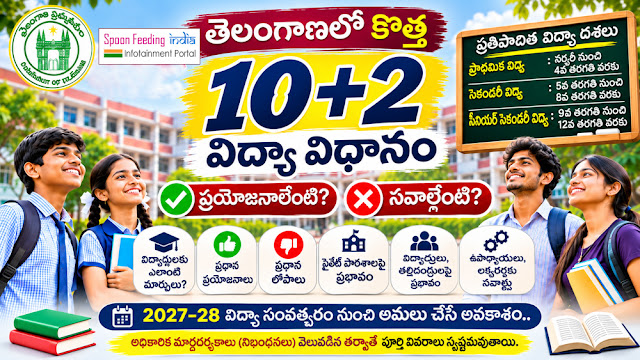
Telangana's proposed 10+2 education system has generated interest among students, parents, teachers and education planners. The model is intended to create a clearer school pathway through secondary and higher-secondary education while supporting better subject choices and career preparation.
What does the Telangana 10+2 education system mean?
The 10+2 structure generally refers to ten years of school education followed by two years of higher secondary education. Students usually choose academic, vocational or skill-focused subjects after the foundational school years, depending on the final policy and board guidelines.
Potential advantages for students
- Clearer progression from secondary education to intermediate or higher-secondary study.
- More time for career guidance, competitive-exam preparation and practical learning.
- Better alignment between school subjects, vocational skills and higher education choices.
- A consistent structure that parents can understand when comparing schools and boards.
Concerns and implementation challenges
Any education reform needs teacher training, updated classrooms, accessible learning materials and a careful transition plan. Rural and urban schools may need different support, and the final rules on examinations, subject combinations, fees and transfers should be checked against official Telangana government notifications.
What parents and students should check
Before changing schools or selecting subjects, confirm the applicable academic year, board recognition, examination pattern, syllabus, admission rules and official circulars. Treat social-media summaries as preliminary information and rely on the Telangana education department and the student's school for final instructions.
This guide is an informational overview, not an official government notification. For related career and education resources, explore Work & Career, Government Jobs and Technology & Internet on Spoonfeeding.in.